by Alan Colin Arce | 1 December 2025 | English, Insights and Signals Reports
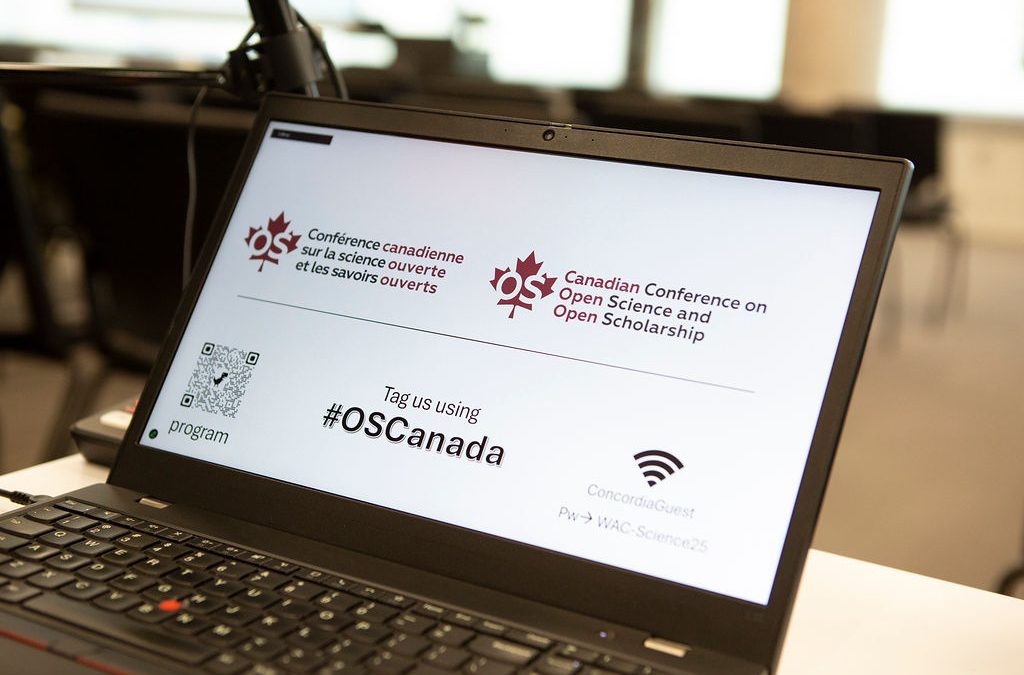
This insights and signals reports on the First Canadian Conference on Open Science and Open Scholarship. Items discussed in this report include the Participation of INKE partners in the First Canadian Conference on Open Science and Open Scholarship and key takeaways from the event

by Alan Colin Arce | 24 November 2025 | Community News, French
Cet article présente l’analyse de recherches « Politique », disponible en libre accès via Open Scholarship Press. L’analyse de recherches « Politique » suit et reflète l’évolution des politiques liées aux savoirs ouverts au Canada et ailleurs, en analysant les changements de politiques et leur pertinence pour les chercheurs, les professionnels de l’information, les bibliothécaires, le corps professoral et les décideurs. Issue de l’Open Scholarship Policy Observatory, cette ressource adopte une perspective canadienne et s’intéresse aux sciences humaines et sociales (SHS), mais elle prend une vue d’ensemble, considérant les savoirs ouverts comme un mouvement international et interdisciplinaire.
by Britt Amell | 24 November 2025 | Community News, English
This post introduces the Policy research scan, available open access via the Open Scholarship Press.. The Policy research scan follows and reflects policy developments related to open scholarship in Canada and beyond, analyzing policy changes and their relevance to researchers, information professionals, librarians, faculty, and policymakers. With roots in the Open Scholarship Policy Observatory, this resource takes a Canadian focus and an interest in the humanities and social sciences (HSS), but it takes a broad view, considering open scholarship as an international and interdisciplinary movement.

by Britt Amell | 13 October 2025 | Community News, French
L’Open Scholarship Policy Observatory a publié quatre volumes complets (deux en anglais et deux en français) qui documentent sept années d’analyse et d’observations politiques dans le domaine en pleine évolution de la recherche ouverte. Ces recueils, librement accessibles via Open Scholarship Press sur la plateforme Wikibooks, retracent l’évolution du mouvement, depuis les tensions initiales jusqu’aux nouveaux défis liés à l’intelligence artificielle et aux infrastructures contrôlées par la communauté.
by Britt Amell | 13 October 2025 | Community News, English
The Open Scholarship Policy Observatory has published four comprehensive volumes (two in English and two in French) documenting seven years of policy analysis and observations from the rapidly evolving open scholarship landscape. The collections, freely accessible through Open Scholarship Press via the Wikibooks platform, trace the movement’s development from foundational tensions to emerging challenges around artificial intelligence and community-controlled infrastructure.
