
by Alan Colin Arce | 29 April 2026 | Community News, English
The 7th annual gathering of the Canadian Australian Partnership for Open Scholarship (CAPOS), held on 2-3 December 2025 at the Australian National University in Canberra, brought together a vibrant group of scholars, policymakers, industry experts, and advocates to discuss recent developments in artificial intelligence and open scholarship. This year’s theme “Re-Defining Open Social Scholarship in an Age of Generative ‘Intelligence’” provided reflection points into how artificial intelligence is changing the open scholarship landscape for Canadian and Australian researchers and stakeholders.

by Alan Colin Arce | 10 March 2026 | English, Insights and Signals Reports
This Insights and Signals reports on the development, content and impact of the Revues Savantes Canadiennes/Canadian Scholarly Journals list dataset.
Items discussed in this report include:
The unique traits and relevance of the Revues Savantes Canadiennes/Canadian Scholarly Journals list dataset
Research projects, library science and scientific policy instances which have already used and benefited from the list
The importance of collective work in keeping the list updated and in appropriating it as a valuable resource

by Alan Colin Arce | 13 February 2026 | English, Observations, Observations and Responses
This piece revisits Canada’s Roadmap for Open Science (2020), which was released by the Office of the Chief Science Advisor and initially addressed within the Open Scholarship Policy Observatory by Caroline Winter (2020). Her work is built upon here by summarizing the Roadmap and considering it in today’s context, five years since publication. Some previously identified limitations are discussed, as well as some future directions.

by Alan Colin Arce | 12 January 2026 | English, Insights and Signals Reports
This report examines some of the challenges facing French-language scholarly publishing in Canada, despite the country’s official bilingual status since 1969. Key takeaways include the federal government’s significant investment ($4.1 billion Action Plan with $8.5 million specifically for French research infrastructure), Quebec’s leadership through Érudit’s digital publishing consortium and the FRQ’s $10 million commitment to a collaborative network for francophone journals, and comprehensive recommendations for reforming research evaluation practices to better value multilingual scholarship and support the transition to diamond open access models that can sustain French-language publishing in Canada.
by Alan Colin Arce | 1 December 2025 | English, Insights and Signals Reports
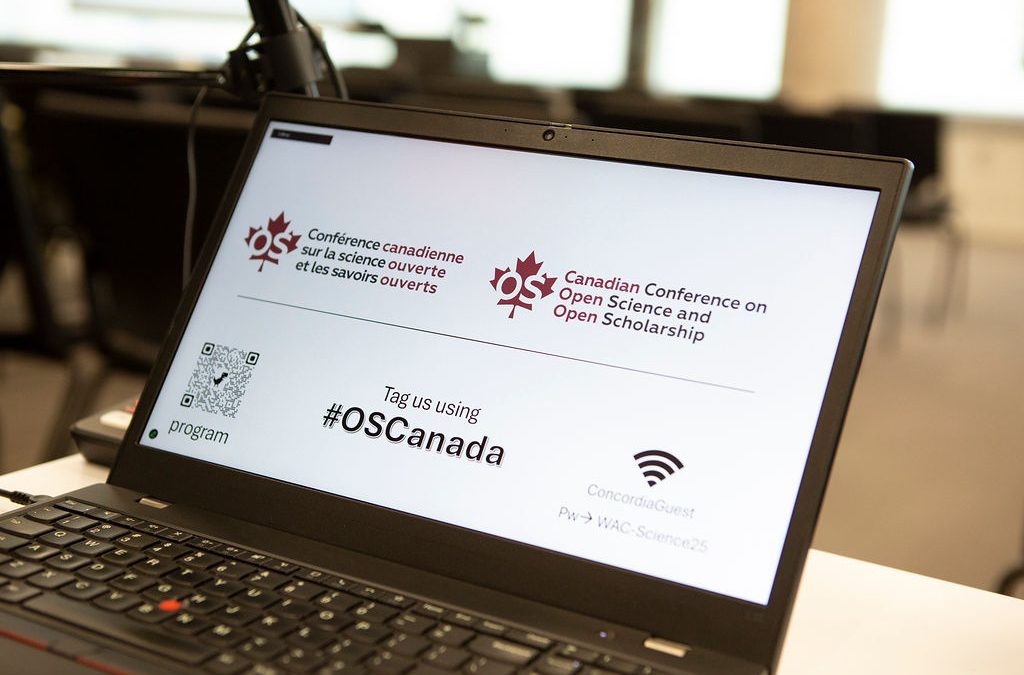
This insights and signals reports on the First Canadian Conference on Open Science and Open Scholarship. Items discussed in this report include the Participation of INKE partners in the First Canadian Conference on Open Science and Open Scholarship and key takeaways from the event

by Britt Amell | 24 November 2025 | Community News, English
This post introduces the Policy research scan, available open access via the Open Scholarship Press.. The Policy research scan follows and reflects policy developments related to open scholarship in Canada and beyond, analyzing policy changes and their relevance to researchers, information professionals, librarians, faculty, and policymakers. With roots in the Open Scholarship Policy Observatory, this resource takes a Canadian focus and an interest in the humanities and social sciences (HSS), but it takes a broad view, considering open scholarship as an international and interdisciplinary movement.
